Saturday, October 24, 2020

DeSegi - C64 in the [Entrex / Nixdorf] terminal

From https://forum.classic-computing.de/forum/index.php?thread/17730-c64-im-terminal/&postID=260682#post260682

According to the forum discussion thread, If I translate and interpret it correctly, DeSegi bought this as it is on eBay in October 2019.  That's awesome!

But the questions remain...

  • who did the customization work? 
  • which keyboard style was this terminal before this was done?  
  • Do the original electrical components and/or Key Tronic keyboard still exist?


Tuesday, October 6, 2020

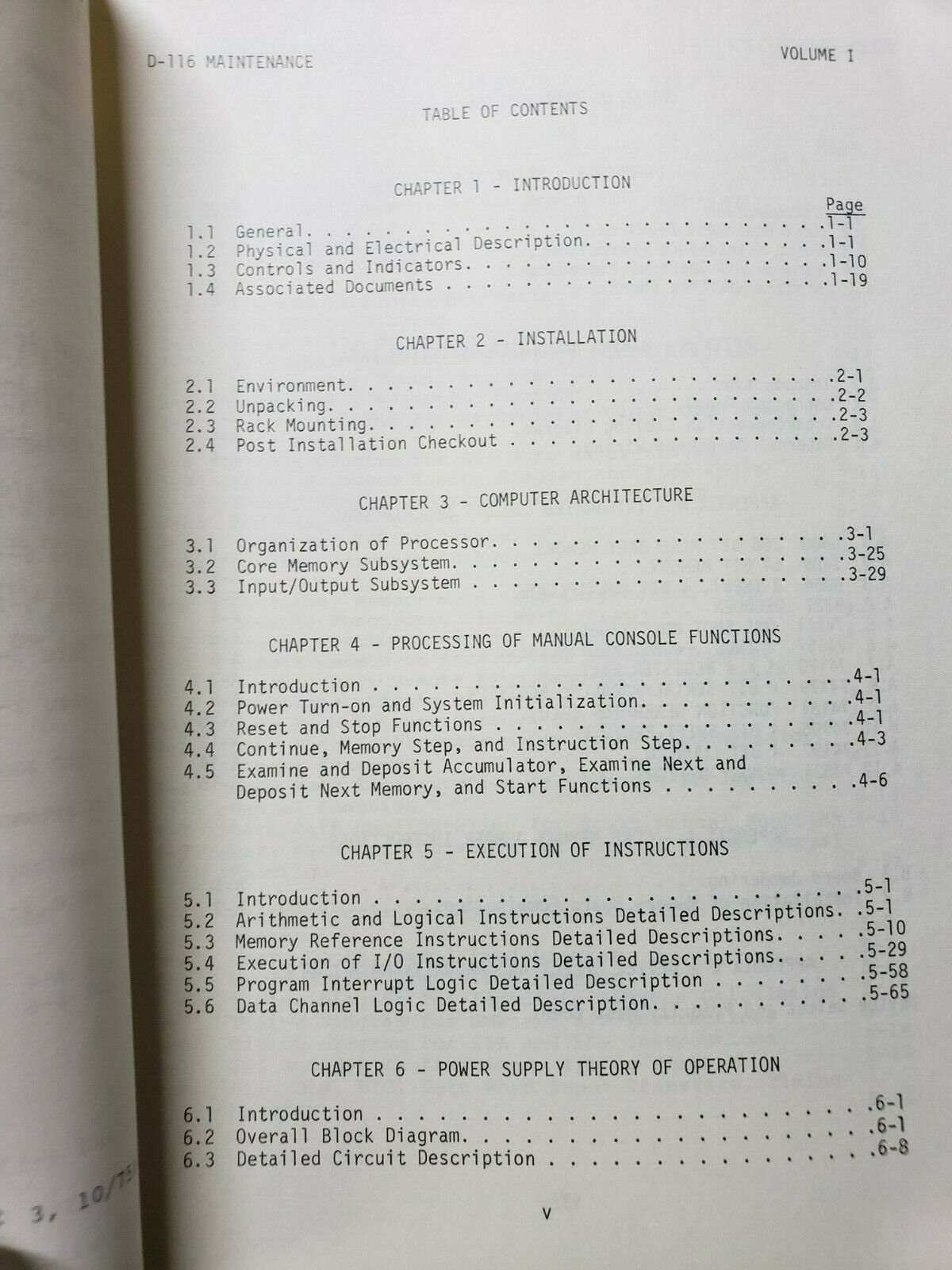
Vintage 1976 Digital Computer Controls, Inc. D-116 Computer Maintenance Manual

Original eBay Auction                       Archived eBay Auction

Unfortunately, we were out bid on this one.  Congratulations to the winner!

We hope to connect with him/her somewhere soon along the way, so if you're reading this, please send us an email!


Friday, June 5, 2020

Nixdorf CEAG Dominit 820 Power Supply

This power supply bears a resemblance to the Nixdorf 620 power supply shown here, but is likely for a different system...possibly Nixdorf's 820?  Seems logical, given that the power supply numbers match the Nixdorf-assigned system numbers.  I'm just archiving it here for reference...
eBay Auction                                        Auction Archive


Wednesday, January 1, 2020

Saturday, November 30, 2019

SEECHECK from REDIFON developed with Entrex

Equivalents: ENTREX 480 from ENTREX, DATENSAMMELSYSTEM 620 from NIXDORF.

https://pl.wikipedia.org/wiki/Rejestrator_danych

The connection comes from this page:
https://www.aldricharchive.co.uk/a-technical-history-of-rocc-computers

Older web version
https://web.archive.org/web/20191103034213/http://www.aldricharchive.com/technical-history-rocc.html

Seecheck (1972)
The technology for the Seecheck system was developed with the Entrex company in the US, Redifon having the rights to sell it in the UK, and also developed a market in Eastern Europe and the Middle East. It was based around the Nova 16-bit mini computer produced by Data General, and set the basic architecture of all the systems developed down to the 2885 in 1990.

Seecheck Basic Control Groups (BCG) used a ‘Lowboy’ rack containing a 17 slot ‘DCC’ mini, tape drive, disk drives and necessary power supplies. The DCC mini computer had a 1200ns processor and 64KB of core store, and was also the only Nova based system supplied with programmers switches built in to the front panel, all subsequent systems having a detachable one for engineers’ use only.

One or two 2.5MB or 5MB DRI disc drives were supported, these utilising a single platter removable cartridge (although used as a fixed unit in Redifon systems) with a rack and pinion head actuator mechanism and optical sensor similar in principle to that subsequently used in floppy drives. The tape drive could be either a 7-track 556 bits per inch or a 9-track 800bpi.

Up to 32 Mk II terminals could theoretically be connected, each having its own I/F board in an auxiliary card cage, but eight was the normal limit. The terminals were normally the MK II type with the keyboard built in to the display unit, although the MK I was similar but with the base of the terminal integrated into the desk top. Both versions had a 480 character display. From the MK II onwards all Redifon terminals had a Cyrillic variant.

The Redicheck system was a cut-down version with only 48KB of core and a maximum of eight terminals.

The software was a pure key-to-disc application, although VDU orientated, and very flexible compared to the card or paper tape punching systems it was replacing. This software became known as ‘7’ series.

In 1974 Redifon signed a licensing agreement with Metronex/Meramat in Poland whereby Seecheck would be manufactured in Poland using Soviet-bloc hardware for sale in Soviet-bloc countries. Although peripherals were available in the Soviet-bloc there was not a suitable CPU so Redifon designed and developed a DG Nova compatible mini, called the P.1, for manufacture in Poland. This CPU complied with the then CoCom strategic embargo. Later Redifon would up-grade this design for the E.17 mini made in the UK.

So that would be a clone of a clone of a clone perhaps

And then somehow we get to this image, which shows the newer Entrex keystation "trapezoid" terminal?


More on Redifon:


-------------------------------------------------------

-------------------------------------------------------

-------------------------------------------------------


-------------------------------------------------------


-------------------------------------------------------


-------------------------------------------------------


-------------------------------------------------------

Metronex is the Polish foreign trade organization which trades in computers, automation equipment, and instruments; its turnover in 1973 was estimated at about $300 million. Computers and peripherals have been exported to all COMECON countries regularly for many years... 
...and Redifon of the U.K. licensed MERA to manufacture the Seecheck key-to-disc systems which are· based on an original Entrex design from the U.S. 


Sunday, November 3, 2019

Recognition Equipment's Input 80 OCR

Computerworld - May 9, 1973 - page 9-10
A company (not very creatively called) Recognition Equipment...NOT Entrex, but they are certainly using Entrex Data/Scopes there.
But it looks like Recognition Equipment put a sticker over the "Entrex Data/Scope" on the plexiglass screen cover...

club-nixdorf.org archives & The last 620

Does anyone know the original author of this site?  Is he/she still out there?
(backup at archive.org/web)

José A. Margolles Rodríguez  or José Mesa

There are some fantastic promotional images of the Nixdorf 620 (Entrex 480) system and Data/Scope Keystations (terminals) on here...


Where did he get these?
 

And then there's 
The Last 620

http://www.club-nixdorf.org/cn/web/anecdotas/ultimo620.htm
(backup at archive.org/web)

Friday, November 1, 2019

Scanner Board/Terminal Multiplexer Board

Clearly this is a very important component of the system, unique to Entrex!  According to Barry King, who was an Area Field Engineering Manager for Entrex from 1977-1991 in Nashville, TN:
"The key to the Entrex system was the Scanner board and software developed by 2 or 3 guys at MIT as a project to complete their Master's.".  Read more here.

ComponentQty
899-5-R220/3301
SN740020
SN740418
SN74083
SN74109
SN741071
SN741212
SN741221
SN741771
SN741795
SN743816
SN74407
SN74421
SN747413
SN74763
SN74934
SN754517

 Barry King 

Hi AJ. Sorry for the extremely late response. I have been very busy the last months. The key to the Entrex system was the Scanner board and software developed by 2 or 3 guys at MIT as a project to complete their Master's. Without those two it was just a regular Data General mini-computer. The scanner polled each terminal for service and did it extremely fast.. Each terminal was directly connected individually. From the Entrex/Nixdorf days, all I have are a handful of terminal connectors and a Field Service book. If I can provide any helpful info just let me know. I will watch more closely. Regards, Barry


Thursday, October 31, 2019

Tuesday, October 29, 2019

Entrex Data/Scope Key Tronic 065-01380 PCB-002D Keyboard preserved as refrigerator magnets!

My friend Cprossu has found this instructables.com post for me.

I left a comment for the author, complimenting him on saving this keyboard from the trash, and being so creative with it.  It is [mostly] preserved, even though the reed switches are now removed completely.  But one of the reasons I like this system is because of the terminals, and the keyboards are always one of the best parts of that!

https://www.instructables.com/id/Fridge-Magnet-Keyboard/